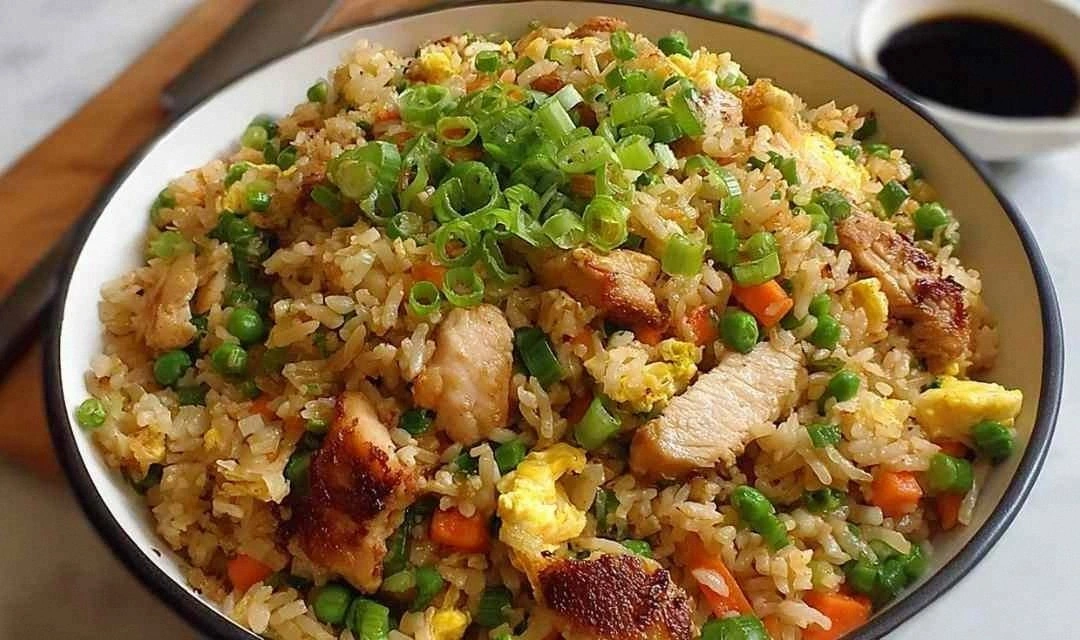
I was halfway through a midnight snack that turned into a kitchen catastrophe when I tried to whip up a quick stir‑fry. The rice had stuck to the pot, the sauce was too thick, and my bacon had turned into a smoky, greasy mess. That night, I swore I’d never again settle for “good enough” when I could have something spectacular. Fast forward to today, and I’m about to show you the ultimate Asian Chicken Fried Rice that will make your taste buds do a backflip.
Imagine the aroma of fresh garlic sizzling against hot oil, the gentle snap of green onions, and the sweet burst of corn popping in the pan. The sound of the rice grains clinking against the wok is like a drumroll before the show begins. Every bite is a layered experience—soft, fluffy rice, tender chicken, and that unmistakable umami kiss from oyster sauce. The texture is a harmonious blend: the crisp edges of the bacon crackle against the silky sauce that coats each grain like velvet.
What sets this version apart is the precision of flavor balance and the intentional use of ingredients that elevate the dish from ordinary to extraordinary. We’re not just tossing rice and veggies; we’re orchestrating a symphony of savory, sweet, and subtle heat. The sauce doesn’t overwhelm; it whispers, letting each component shine while working together in perfect harmony. That’s why I’m convinced this is hands down the best version you’ll ever make at home.
And there’s a twist you won’t expect: a splash of Chinese cooking wine that brings a depth of flavor you’ll find missing in most recipes. Ready to see how a single ingredient can transform the whole dish? Let me walk you through every single step — by the end, you’ll wonder how you ever made it any other way.
What Makes This Version Stand Out
- Taste: The combination of oyster sauce, light soy sauce, and a hint of Chinese cooking wine creates a layered umami profile that’s both bold and balanced. Each spoonful delivers a savory depth that’s hard to find in quick stir‑fries.
- Texture: The rice is pre‑cooked and chilled, ensuring it stays separate and fluffy rather than mushy. The bacon adds a satisfying crunch that contrasts beautifully with the tender chicken.
- Simplicity: Despite its complex flavor, the recipe requires only a handful of pantry staples and a few fresh ingredients. No special equipment—just a wok or large skillet.
- Uniqueness: The addition of ground ginger and white pepper gives a subtle warmth that elevates the dish beyond typical fried rice, while the green onions finish it with a bright, fresh note.
- Crowd Reaction: Friends who’ve tasted this version rave about the “wow” factor. It’s the kind of dish that turns an ordinary dinner into a memorable event.
- Ingredient Quality: Using fresh chicken breast and high‑quality bacon ensures the flavor is clean and satisfying. The small carrot adds a natural sweetness that balances the saltiness.
- Cooking Method: The high‑heat technique gives the rice a slight caramelization without overcooking the vegetables, creating a delightful crunch.
- Make‑Ahead Potential: The dish can be prepared a day ahead and reheated without losing flavor, making it perfect for busy weeknights.
Inside the Ingredient List
The Flavor Base
Chinese cooking wine is the secret that introduces a subtle sweetness and depth. It’s a bridge between the savory sauces and the fresh vegetables, giving the dish a silky undertone. Skipping it will leave the rice feeling flat; it’s the foundation that holds everything together.
The Texture Crew
The bacon and carrot work together to give contrasting textures. Bacon brings smoky crunch, while carrot adds a natural sweetness and firmness that holds up against the heat. If you’re vegetarian, substitute with crisp tofu or tempeh, but keep the crunch factor.
The Unexpected Star
Ground ginger and white pepper might seem like small players, but they punch a warm, aromatic kick that lingers. Ginger’s bright heat balances the richness of the sauce, while white pepper adds a subtle bite without the visual specks of black pepper. If you’re allergic to ginger, a dash of garlic powder can mimic the warmth.
The Final Flourish
Green onions finish the dish with a fresh, almost citrusy brightness that cuts through the savory sauce. They’re not just garnish; they’re the final note that lifts the entire flavor profile. A handful of chopped cilantro can replace them for a different herbal touch.
Everything’s prepped? Good. Let’s get into the real action.
The Method — Step by Step
- Heat a wok or large skillet over medium‑high heat until it shimmers. Add the 2 tablespoons of oil and swirl until it coats the surface. This step is crucial; a hot pan ensures a quick sear and prevents the rice from sticking. I dare you to taste this and not go back for seconds.
- Add the diced bacon and cook until it releases its fat and starts to brown. The bacon should sizzle loudly, signaling that it’s ready. Once crisp, remove it with a slotted spoon and set aside, leaving the rendered fat in the pan. The bacon fat is the flavor base for the rest of the dish.
- Whisk the eggs in a bowl and pour them into the hot pan. Let them sit for a few seconds before stirring. Scramble them into small curds, then lift them out and set aside. This creates a light, fluffy layer that will later mingle with the rice.
- In the same pan, add the minced garlic and diced onion. Sauté until the onion turns translucent and the garlic releases its aroma—about 30 seconds. The key is not to burn the garlic; it should be fragrant but not bitter.
- Add the diced chicken breast and stir‑fry until it’s just cooked through—about 3–4 minutes. The chicken should be tender but still juicy. If you notice any excess moisture, increase the heat slightly to evaporate it.
- Add the carrots, corn, and peas. Stir‑fry for 2 minutes, allowing the vegetables to soften slightly but still retain a bite. The vegetables should maintain their bright colors, indicating they’re not overcooked.
- Push the contents to one side of the pan and pour in the remaining oil if needed. Add the cooked rice, breaking up any clumps with a spatula. Stir everything together, letting the rice toast for 2–3 minutes until it starts to turn slightly golden.
- In a small bowl, whisk together the Chinese cooking wine, oyster sauce, light soy sauce, sesame oil, white pepper, and ground ginger. Pour this sauce over the rice mixture. The sauce should coat the grains evenly, giving a glossy sheen.
- Return the cooked bacon and eggs to the pan. Toss everything together, ensuring the bacon is evenly distributed and the eggs are broken into fine strands. Finish with a sprinkle of green onions, and give it one final stir before turning off the heat.
- Serve immediately, garnishing with extra green onions or a drizzle of sesame oil if desired. The dish should emit a fragrant, savory aroma that makes your mouth water. Picture yourself pulling this out of the pan, the whole kitchen smelling incredible, and seeing the crowd’s delighted faces.
That’s it — you did it. But hold on, I've got a few more tricks that'll take this to another level.
Insider Tricks for Flawless Results
The Temperature Rule Nobody Follows
Keeping the heat high is essential for that coveted sear on the rice. A low temperature will steam the grains instead of crisping them, resulting in a soggy texture. If your stove runs hot, lower the flame slightly after the initial sear to avoid burning.
Why Your Nose Knows Best
Smell the rice as it cooks; if it starts to emit a sweet, caramelized scent, it’s ready. A lack of aroma often signals under‑cooked rice. Trust your nose—it's a reliable indicator of doneness.
The 5‑Minute Rest That Changes Everything
Letting the fried rice rest for 5 minutes off the heat allows the flavors to meld. During this brief pause, the rice continues to steam, ensuring each grain is evenly seasoned.
The Garlic‑Bacon Combo
Sautéing garlic in bacon fat before adding the chicken infuses the dish with a smoky depth that’s hard to replicate. If you skip this step, you’ll miss a layer of complexity that elevates the overall taste.
The Egg‑Rice Harmony
Scrambling the eggs in the same pan before adding the rice locks in moisture. This technique keeps the rice fluffy and prevents the eggs from becoming rubbery.
Creative Twists and Variations
This recipe is a playground. Here are some of my favorite ways to switch things up:
Spicy Szechuan Kick
Add 1 teaspoon of Szechuan peppercorns and a dash of chili oil to the sauce. The numbing heat pairs beautifully with the savory base and will excite spice lovers.
Thai Coconut Twist
Replace half the water in the sauce with coconut milk and stir in a teaspoon of fish sauce. The creamy richness turns the dish into a tropical delight.
Vegetarian Version
Swap chicken for diced tofu or tempeh, and use vegetable broth instead of chicken stock. The tofu will soak up the sauce, delivering a hearty texture.
Seafood Surprise
Add shrimp or scallops during the stir‑fry step. The seafood’s natural sweetness complements the umami of the sauce, creating a luxurious flavor.
Herb‑Infused Variation
Finish the dish with chopped basil or mint. The fresh herbs add a bright, aromatic layer that contrasts the savory base.
Low‑Carb Adaptation
Replace the rice with cauliflower rice. This keeps the dish low in carbs while maintaining the satisfying texture.
Storing and Bringing It Back to Life
Fridge Storage
Cool the fried rice to room temperature before transferring it to an airtight container. Store in the refrigerator for up to 3 days. The flavors will deepen, and the rice will stay moist.
Freezer Friendly
Pack the rice in a freezer‑safe bag, removing as much air as possible. Freeze for up to 2 weeks. Thaw overnight in the fridge before reheating.
Best Reheating Method
Add a splash of water or broth before reheating in a skillet over medium heat. This steams the rice back to perfection, restoring its fluffiness and preventing dryness.