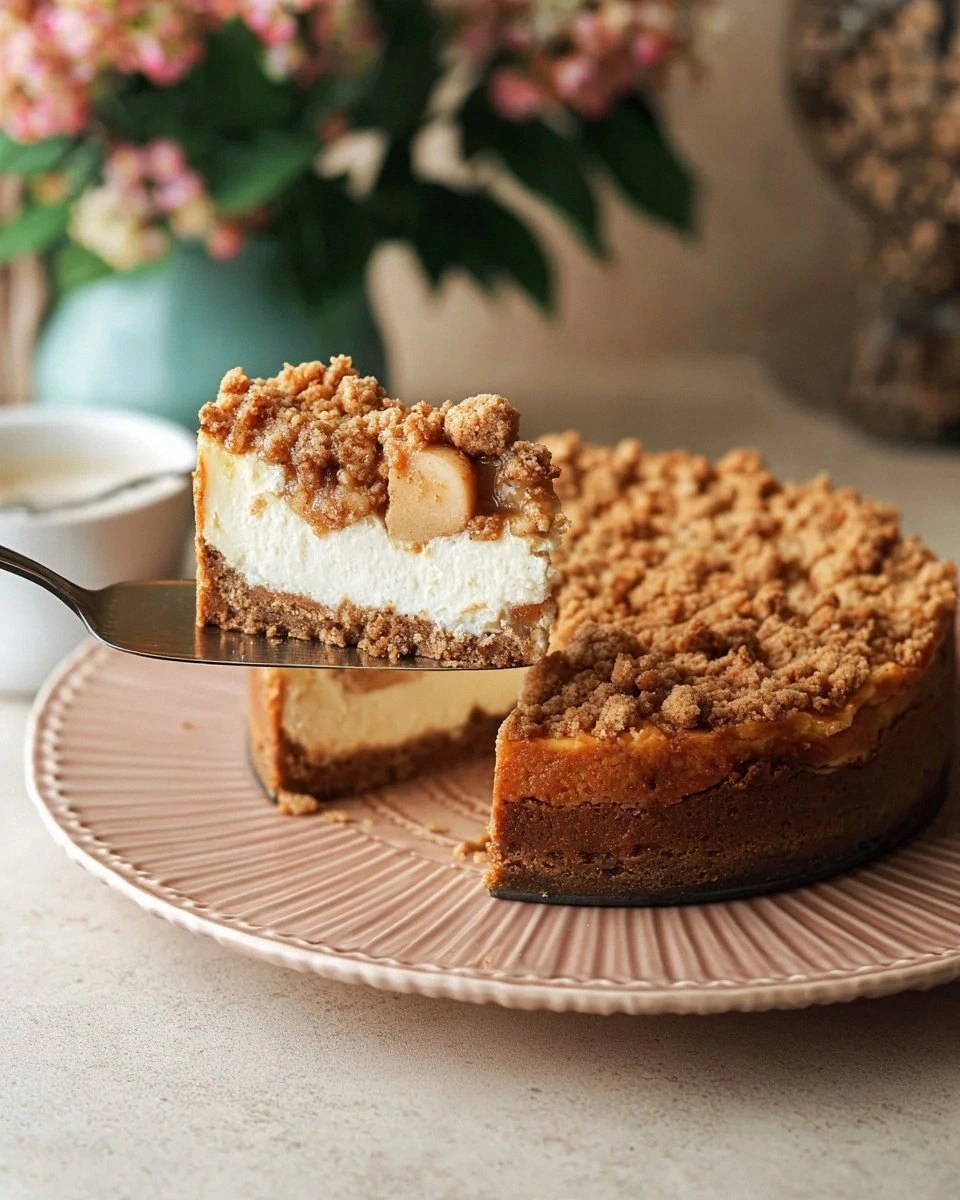
I still remember the day I set my kitchen on fire trying to make a regular apple crumble. Okay, maybe "on fire" is dramatic, but the smoke alarm symphony was real, and the charred fruit at the bottom of my dish looked like something from a volcanic science fair. I stood there waving a dish-towel at the detector, thinking, "There has to be a better way to get that cozy cinnamon-apple vibe without the guesswork." Fast-forward through three more crumbly disasters, a late-night cheesecake craving, and one light-bulb moment: why not marry the two classics into one towering, silky, streusel-topped showstopper? Apple Crumble Cheesecake was born out of pure stubbornness—and it turned out to be the dessert I’d frame on a wall if that weren’t weird.
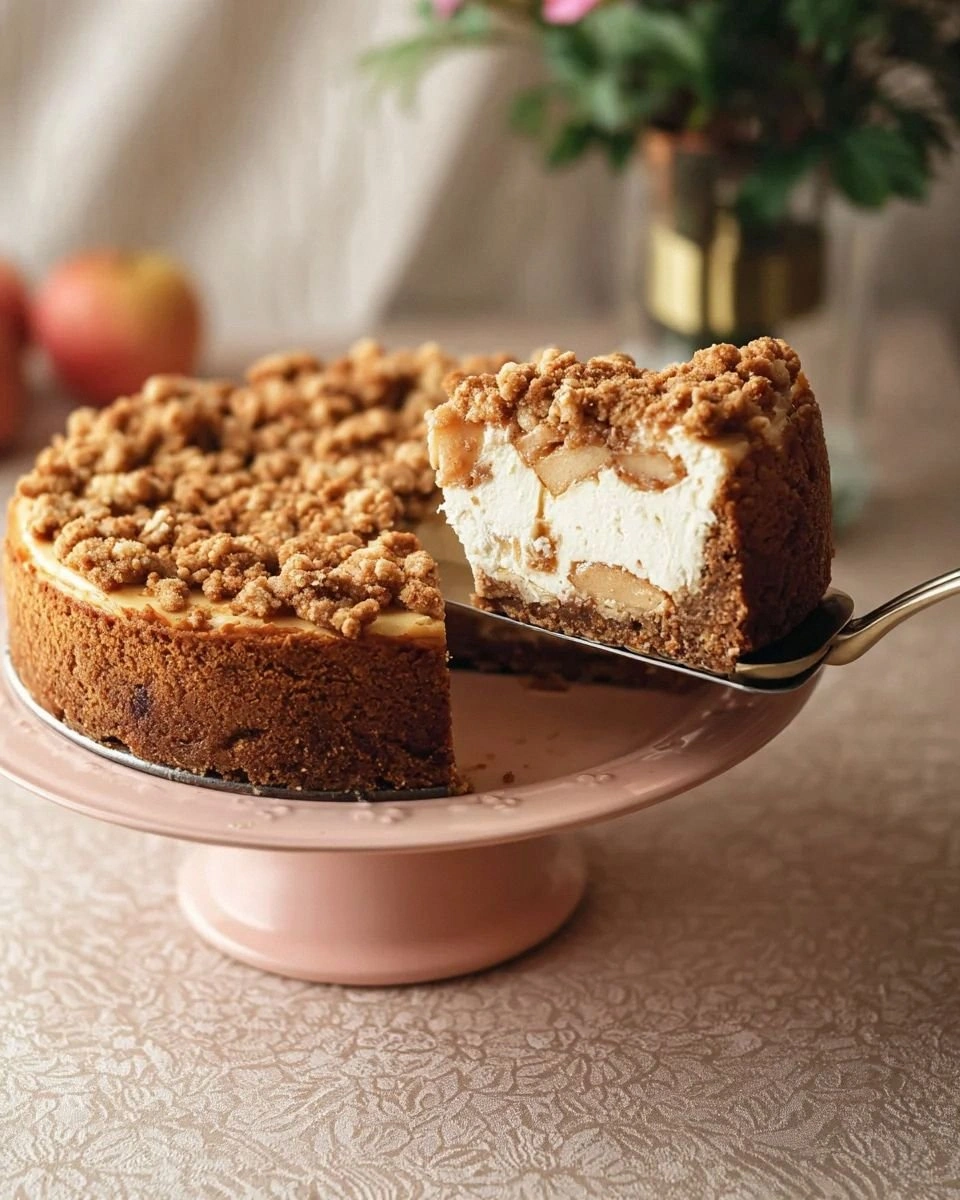
Picture this: a buttery brown-sugar crust that snaps under your fork like thin caramel glass, followed by cloud-soft cheesecake freckled with vanilla bean, then a layer of tender apples that taste like autumn in blanket form, and finally—because we’re not done—buttery crumble shards that shatter delicately between your teeth. The first time I slid this out of the springform pan, my neighbor wandered over like a cartoon character floating on the smell waves. I dare you to taste this and not go back for seconds. Honestly, I ate half the batch before anyone else got to try it. My excuse? Quality control.
What makes this version different from every other apple cheesecake floating around the internet? Most recipes get this completely wrong: they stir raw apples straight into the batter, which releases water, creates sinkholes, and leaves you with a soggy slice that tastes like regret. Here we quick-caramelize the fruit first, concentrate the flavor, and layer it like edible confetti. Stay with me here—this is worth it. The result is pockets of jammy fruit that hold their shape and keep the cheesecake texture feather-light. Future pacing: imagine yourself pulling this out of the oven, the whole kitchen smelling like a candle you’d pay thirty bucks for, and your friends already hovering with forks.
If you’ve ever struggled with cracked cheesecake tops, water-bath drama, or crusts that crumble faster than my willpower near a tray of brownies, you’re not alone—and I’ve got the fix. Let me walk you through every single step—by the end, you’ll wonder how you ever made it any other way.
What Makes This Version Stand Out
- Flavor Depth: We brown half the butter for the crumble, giving it hazelnut vibes without the nuts. The cheesecake batter gets a whisper of maple syrup, so every bite tastes like someone bottled a Vermont weekend.
- Texture Play: Instead of a single-note graham base, we use crushed digestive biscuits plus a handful of pretzels for salty pops that keep your palate guessing.
- Fool-Proof Method: No water bath, no cracked tops. A low-and-slow oven plus a simple pan of hot water on the rack below does the steam work for you.
- Make-Ahead Magic: This beauty chills overnight and somehow tastes even better the second day, meaning you can feed a brunch crowd without waking up at dawn.
- Show-Stopping Height: We use an entire kilo of cream cheese—yes, really—so slices stand tall like bakery window models. Your Instagram will thank you.
- Seasonal Flexibility: Swap apples for pears in winter or peaches in summer; the method stays identical. One recipe, year-round bragging rights.
- Leftover Love: Any extra crumble bakes into a killer ice-cream topping. I keep a jar in my freezer and sprinkle it like edible confetti on yogurt, oatmeal, or directly into my mouth at 2 a.m.
Inside the Ingredient List
The Flavor Base
Full-fat cream cheese is non-negotiable. Low-fat versions contain more water, leading to a soupy filling that sinks in the middle like a forgotten trampoline. Let it come to room temperature so it whips cloud-light; cold bricks create lumps no amount of mixing will fix. Sour cream adds tang that plays off sweet apples, but Greek yogurt works in a pinch—just expect a slightly firmer set. Brown sugar sneaks into both crust and crumble for caramel depth, while a tablespoon of maple syrup in the batter gives subtle woodsy notes that scream autumn comfort.
The Texture Crew
Granny Smith apples hold their shape under heat and bring bright acidity to cut through all that dairy richness. Peel them first; nobody wants chewy apple jackets ruining the silk fest. A quick sauté in butter, cinnamon, and a pinch of salt concentrates flavor and drives off excess moisture—skip this step and you’ll swim in a watery cheesecake soup. Eggs act as the silent scaffolding, so measure precisely and add them one at a time; over-beating incorporates air that later collapses, leaving surface craters reminiscent of the moon.
The Unexpected Star
Pretzels in the crust are my secret weapon. They add a toasty, malty backbone and make people ask, “Why does this taste like a salted caramel apple at a fair?” Crush them in a zip-bag with a rolling pin—great therapy after a long day—and mix with digestive biscuits for sweet-salty harmony. If pretzels aren’t your jam, swap in Ritz crackers or even plain cornflakes, but you’ll lose that addictive salty punch that keeps everyone guessing.
The Final Flourish
Demerara sugar in the crumble creates those glittery, crunchy nuggets that contrast the creamy interior. If you can’t find it, turbinado or even crushed sugar cubes work, but please don’t use regular granulated sugar; it melts into boring flatness. A touch of rolled oats stretches the topping, adds fiber, and makes you feel slightly virtuous while eating cake—hey, every little lie helps.
The Method — Step by Step
- Preheat your oven to 160 °C fan (320 °F) and position a shelf just below center. Slide a roasting tray filled with hot tap water onto the bottom rack; this creates gentle steam that keeps the cheesecake surface elastic. Trust me, skipping the water bath but still using steam is the lazy genius move you’ll brag about later. While the oven hums, start the crust.
- Blitz digestive biscuits and pretzels into rough rubble—some pea-sized bits are fine for crunch. Stir in melted brown butter, a pinch of salt, and a tablespoon of demerara for extra sparkle. Press the mixture into the base and halfway up the sides of a 23 cm springform pan, using a straight-sided glass to compact firmly. That sizzle when it hits the pan? Absolute perfection. Slide the crust into the oven for 10 minutes to set, then cool while you whisk the filling.
- In a stand mixer, beat room-temp cream cheese on medium until smooth, about 90 seconds. Add both sugars in a slow rain, then crank to high for 30 seconds; the mixture should look like fluffy cloud frosting. Scrape the bowl religiously—lumps hide like introverts at a party. Reduce speed to low and stream in sour cream, vanilla, and maple until combined.
- Add eggs one at a time, mixing just until the yellow disappears. Over-mixing whips in air that later collapses, causing surface craters big enough to store spare change. Okay, ready for the game-changer? Fold in a generous tablespoon of lemon juice; the gentle acidity tightens proteins and helps prevent cracks without tasting tart.
- Meanwhile, melt a knob of butter in a wide skillet over medium-high. Toss in peeled, diced apples, a dusting of cinnamon, and a pinch of flaky salt. Sauté for 5–6 minutes until the fruit is just tender and the liquid has reduced to glossy syrup. Your kitchen will smell like a candle that should be illegal. Cool the apples completely; hot fruit will scramble the batter and leave you with cheesy scrambled eggs—nobody wants that.
- Scrape half the cheesecake batter over the pre-baked crust, smoothing with an offset spatula. Dot with half the cooled apples, then repeat, finishing with a final layer of batter. Give the pan a gentle shimmy to expel rogue air bubbles. Don’t tap it on the counter like a maniac; slow and steady keeps the layers distinct.
- Now the fun part: combine flour, rolled oats, demerara, cinnamon, and a pinch of salt in a bowl. Pour in melted brown butter and stir until clumps form. Some should be pea-sized, some chunky like gravel—variety is the crunch of life. Sprinkle the crumble over the top in an even blanket; resist pressing down, or it’ll sink and turn soggy.
- Bake on the center rack for 60 minutes, then rotate the pan 180 degrees for even browning. Reduce temperature to 140 °C and bake another 25–30 minutes. The edges will puff slightly and the center should jiggle like set jelly when you nudge the pan. If the crumble browns too quickly, tent loosely with foil, but don’t seal it—steam needs to escape or you’ll have cheesecake soup.
- Turn off the oven, crack the door with a wooden spoon, and let the cheesecake cool inside for 1 hour. This gradual descent prevents the dreaded sinkhole center. Remove, run a thin knife around the edge to release, then chill at least 6 hours—overnight is better. Cheesecake is a diva that improves with beauty sleep.
- Before serving, warm a long slicing knife under hot tap water, wipe dry, and cut in confident downward strokes. Clean the blade between cuts for Instagram-worthy slices that stand tall. Drizzle each plate with a little caramel if you’re feeling extra, or serve naked—this beauty needs no makeup.
Insider Tricks for Flawless Results
The Temperature Rule Nobody Follows
Most recipes yell, “Use room-temp ingredients!” then leave you guessing why it matters. Cold cream cheese refuses to emulsify, leading to tiny lumps that bake into chalky pebbles. Pull dairy out two hours ahead, or cube and microwave on 20% power in 15-second bursts until barely warm to the touch. A friend tried skipping this step once—let’s just say it didn’t end well, and her cheesecake looked like it had acne.
Why Your Nose Knows Best
Ignore the clock for one second and sniff instead. When the crumble smells like toasted hazelnuts and caramel, it’s done. Visual cues lie—ovens vary, but aroma doesn’t. If you catch a nutty whiff, yank that pan out even if the timer still has five minutes. Over-baked crumble turns into teeth-breaking gravel that could chip dental work, and nobody wants a dessert that sends them to the dentist.
The 5-Minute Rest That Changes Everything
After baking, let the cheesecake sit in the cracked-open oven for exactly five minutes longer than you think necessary. This brief sauna relaxes the proteins so they don’t seize when they hit the cooler kitchen air. It’s like stretching after a workout—skip it and you’ll regret life choices the next morning when you spot a canyon across the top.
Slice Like a Pro, Not a Caveman
Dental floss unscented, please—slices cleaner than any knife, especially if you’re serving a crowd and want Pinterest-worthy wedges. Slide a 30-cm piece under the cheesecake, cross the ends above, and pull. Each cut is razor-straight, and you can wipe the floss between slices. Bonus: you’ll feel like a kitchen MacGyver.
The Overnight Magic Trick
Cheesecake flavors meld and intensify while it chills. Day-one is good; day-two is symphonic. If you’re serving for a party, bake 48 hours ahead and wrap snugly in plastic once fully cold. The texture firms to fudgy perfection, and the apples bleed just enough amber swirl to look artistic without turning the filling watery.
Creative Twists and Variations
This recipe is a playground. Here are some of my favorite ways to switch things up:
Salted Maple Pecan Version
Sub chopped pecans for half the crumble oats and swap maple extract for vanilla. Drizzle the cooled cake with maple syrup simmered with a pinch of flaky salt. The result tastes like Sunday morning at a log cabin, minus the splinters.
Blackberry Bramble Cheesecake
Replace apples with fresh blackberries sautéed in a splash of port and orange zest. The berries burst into jammy pockets that bleed purple artistry through the filling. Serve with a dollop of lemon whipped cream for color contrast that makes people gasp.
Ginger Snap Crust & Pear Edition
Crushed ginger snaps plus a teaspoon of ground ginger in the batter give gentle heat. Use ripe Bartlett pears and add a pinch of cardamom to the sauté. It’s cozy enough for December yet bright enough for April brunches.
Chocolate Bourbon Caramel Swirl
Melt 100 g dark chocolate and marble through the batter along with store-bought caramel spiked with a tablespoon of bourbon. The chocolate tempers the sweetness and adds sophisticated bitter notes that grown-ups rave about.
Coconut-Lime Tropical Escape
Swap apples for diced pineapple quick-seared in butter and rum. Replace digestive biscuits with crushed coconut cookies and add lime zest to the filling. Top with toasted coconut flakes for a dessert that feels like a Caribbean vacation in every bite.
Savory Cheese Lover’s Curveball
Cut sugar by two-thirds, omit crumble topping, and fold in caramelized onions and thyme with the apples. Serve as an unusual appetizer with crisp white wine. It’s weird, it works, and it’ll make you the legend of your next dinner party.
Storing and Bringing It Back to Life
Fridge Storage
Wrap individual slices or the whole cheesecake—minus the springform ring—in two layers of plastic wrap, then slip into a zip-top bag. It keeps five days without drying, though I’ve never witnessed one surviving that long. Place it toward the back of the fridge where temperatures are coldest and most stable.
Freezer Friendly
Flash-freeze uncovered slices on a tray until solid, then wrap in foil plus a freezer bag. Keeps two months, but for peak flavor use within four weeks. Thaw overnight in the fridge, not on the counter, to prevent condensation from turning the crumble soggy.
Best Reheating Method
Cheesecake is best served cold, but if you like it slightly plush, microwave a slice on 30% power for 15 seconds. Add a tiny splash of water to the plate; it steams back to pillowy perfection without rubbery edges. For the crumble crunch, flash the slice under a hot broiler for 30 seconds, but watch like a hawk—burnt sugar turns bitter fast.