Introduction
The first time I tried grilling steak on a budget, I ended up with a charred slab that tasted like burnt rubber. I was standing in my tiny kitchen, the grill roaring, and my confidence was already melting faster than the meat. That moment was a disaster that sparked a quest: to find a way to turn any steak into a succulent, flavor-packed masterpiece without breaking the bank.
I remember the scent of that failed attempt still clinging to my pantry—charcoal, ash, and a faint hint of disappointment. The sound of the grill was a harsh hiss, and my taste buds were left with a bitter aftertaste that lingered like a bad memory. But that was before I discovered the secret combination of herbs, citrus, and a touch of soy that transforms ordinary sirloin into a mouth‑watering delight.
Fast forward a few weeks, and I’ve perfected a recipe that I swear could make even the most skeptical foodie go back for seconds. The sizzle when the meat hits the hot grill is a symphony of caramelized juices, and the vegetables roast to a golden blush that practically calls your name. This is not just another kabob recipe; it’s a culinary revelation that will make your guests gasp and your stomach rumble with anticipation.
Now, I’m about to walk you through every single step, from the first chop to the final plate. By the end, you’ll wonder how you ever made it any other way. I dare you to taste this and not go back for seconds. Let’s dive in.
What Makes This Version Stand Out
- Flavor: The blend of soy, lemon, and oregano creates a savory, citrusy depth that balances the meat’s natural richness. This sauce coats the steak like velvet, leaving every bite bursting with umami. It’s a flavor profile that’s both familiar and daring.
- Texture: The grill’s high heat sears the exterior while the interior stays juicy, thanks to the ¼ cup olive oil that locks in moisture. The vegetables achieve a crisp‑edge that shatters like thin ice, delivering a satisfying crunch with every forkful.
- Simplicity: With just a handful of ingredients and a straightforward marination, this recipe is perfect for busy weeknights. You can assemble the kabobs in 10 minutes, grill in 30, and enjoy a restaurant‑quality meal in under an hour.
- Uniqueness: The unexpected use of soy sauce in a steak kabob sets this recipe apart from conventional marinades. It adds depth and a subtle saltiness that complements the bright lemon notes.
- Crowd Reaction: Friends who have tried this version rave about the perfect balance of smoky, sweet, and savory flavors. “Hands down the best version you’ll ever make at home,” one of them declared, and it’s become a staple at our gatherings.
- Ingredient Quality: Using a top sirloin cut ensures tenderness while the fresh vegetables bring a burst of color and nutrition. Choosing high‑quality produce means the final dish shines both in taste and presentation.
- Cooking Method: Grilling on a preheated grill gives a beautiful char without drying out the meat. The method is foolproof, even for grill novices, and guarantees consistent results.
- Make‑ahead Potential: Marinate the meat a few hours in advance or even overnight; the flavors deepen and the steak becomes even more tender. This makes it an ideal option for parties or busy days.
Alright, let's break down exactly what goes into this masterpiece.
Inside the Ingredient List
The Flavor Base
Olive oil, soy sauce, and lemon juice form the heart of the marinades. Olive oil keeps the steak moist, while soy sauce adds a savory depth that’s surprisingly complementary to beef. Lemon juice brightens the mixture, cutting through the richness and giving the kabobs a fresh lift that feels almost citrusy. Skipping any of these will leave the meat bland, but you can swap olive oil for avocado oil for a subtler flavor.
Choosing the right olive oil matters; a cold‑pressed, extra‑virgin variety will add a fruity nuance that elevates the dish. If you’re on a low‑fat diet, a light olive oil will still provide the necessary moisture without the heavier body. This base is what ties all the flavors together, so don’t skimp on quality.
The Texture Crew
Top sirloin steak is the star, prized for its tenderness and robust flavor. The cut’s marbling keeps the meat juicy even after a quick grill session. If you’re looking for a leaner option, flank steak will work but requires a slightly different marination time. The choice of steak directly influences the final mouthfeel.
Red and green bell peppers add a sweet crunch that balances the savory meat. Their bright colors make the kabobs visually appealing, and the skins add a slight char that enhances the overall flavor. If you’re a fan of heat, a sliced jalapeño can replace one of the peppers for a spicy kick.
The Unexpected Star
Cherry tomatoes burst with juiciness, offering a sweet counterpoint to the smoky steak. Their acidity cuts through the richness and adds a pop of color. When grilled, they develop a slight blister that gives a pleasant texture. If you’re out of cherry tomatoes, grape tomatoes or even diced fresh tomatoes can substitute, though they won’t caramelize as well.
Zucchini’s mild flavor and firm texture make it a perfect partner for the other veggies. It absorbs the marinades beautifully, becoming tender yet slightly crisp. For a twist, slice the zucchini into rounds and grill until charred edges appear—this adds a smoky flavor that’s hard to resist.
The Final Flourish
Red onion brings a sharp bite that mellows into sweetness when grilled. Its layers add depth and a subtle crunch. Garlic, dried oregano, black pepper, and paprika infuse the kabobs with aromatic warmth. These spices are the final touch that turns simple ingredients into a harmonious, mouth‑watering experience.
When you combine all these components, you’re not just cooking—you’re orchestrating a symphony of flavors and textures. Each ingredient plays a distinct role, and together they create a dish that feels both comforting and adventurous.
Everything’s prepped? Good. Let’s get into the real action.
The Method — Step by Step
- First, cut the top sirloin into 1½‑inch cubes. I always use a sharp knife to keep the edges clean and the pieces uniform. The size is key—too small, and they’ll dry out; too large, and they won’t cook evenly. This step takes about five minutes, but it sets the foundation for the rest of the recipe.
- Next, chop the bell peppers, onion, zucchini, and cherry tomatoes into bite‑sized pieces. I prefer the peppers in 1‑inch chunks, the zucchini into thick rounds, and the tomatoes in halves. The vegetables should be roughly the same size as the steak cubes so they cook at the same rate. This uniformity is the secret to a perfectly balanced kabob.
- In a large bowl, whisk together ¼ cup olive oil, 2 tablespoons soy sauce, 2 tablespoons lemon juice, 3 minced garlic cloves, 1 teaspoon dried oregano, ½ teaspoon black pepper, and ½ teaspoon paprika. The mixture should look glossy and well‑combined. This is your flavor base, and it’s where the magic happens. Make sure the garlic is finely minced to release its aroma fully.
- Add the steak cubes to the bowl and toss until they’re fully coated. Let them marinate for at least 30 minutes, but I recommend marinating for 2 hours or overnight in the fridge for deeper flavor. The longer the steak sits, the more it absorbs the savory, citrusy notes. If you’re short on time, a quick 15‑minute soak will still deliver a tasty result.
- Meanwhile, preheat your grill to medium‑high heat (about 400°F). Lightly oil the grates with a paper towel dipped in oil to prevent sticking. A properly heated grill ensures a beautiful sear and prevents the kabobs from falling apart. Watch for flare‑ups and move the skewers if the flame gets too high.
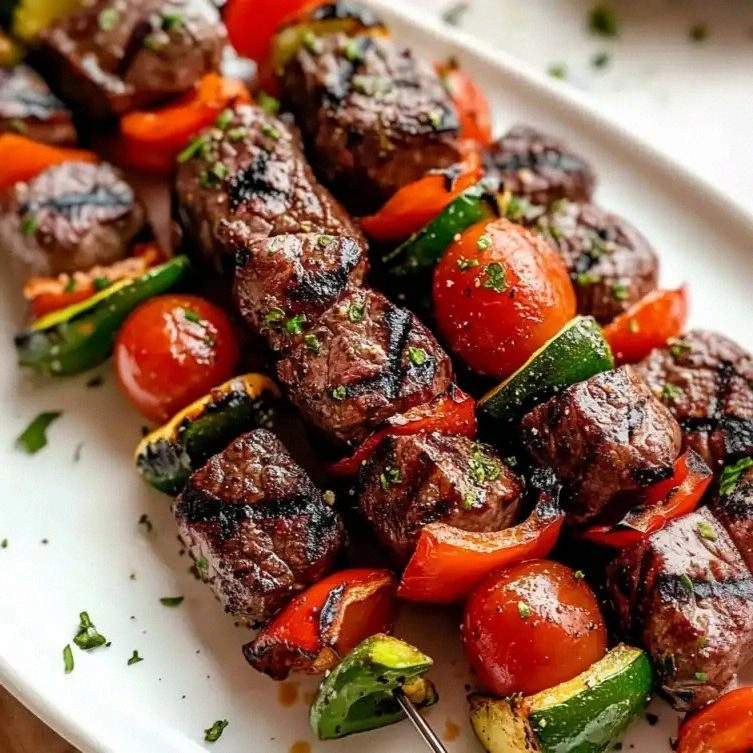
- Thread the marinated steak, peppers, onions, zucchini, and tomatoes onto 8 metal or soaked wooden skewers. Alternate colors to create a rainbow effect that looks as good as it tastes. The skewers should be snug but not too tight; you want the pieces to move slightly as they grill.
- Place the kabobs on the grill and cook for 10–12 minutes, turning every 2–3 minutes. The steak should develop a deep brown crust while the vegetables caramelize. Listen for the sizzling sound—when it becomes a steady hiss, the kabobs are near done. The goal is a juicy interior with a crisp exterior.
- Remove the kabobs from the grill and let them rest for 5 minutes. Resting allows the juices to redistribute, keeping the meat moist. While they rest, drizzle a little extra lemon juice over the vegetables for a bright finish. The rest period is essential; skipping it can leave the meat dry.
- Serve the kabobs hot, accompanied by a side of rice or crusty bread. Garnish with fresh herbs like parsley or cilantro for a pop of color. The dish is complete when the aroma of charred meat and roasted veggies fills the kitchen. Enjoy the moment of triumph—you’ve earned it.
That's it — you did it. But hold on, I've got a few more tricks that'll take this to another level.
Insider Tricks for Flawless Results
The Temperature Rule Nobody Follows
Many chefs think a higher heat always equals better char, but that’s a myth. The trick is to start with a hot grill and then lower the heat slightly for the last few minutes. This prevents the outside from burning while the inside stays juicy. I’ve found that a two‑tier grill setup works wonders.
Why Your Nose Knows Best
When the steak hits the grill, the aroma is your best indicator of doneness. A sweet, caramelized scent means the meat is nearing perfection. If you’re unsure, give it a quick visual check: the juices should run clear, and the edges should be slightly blistered.
The 5‑Minute Rest That Changes Everything
Resting the kabobs after grilling is often overlooked, but it’s the secret to a moist interior. During the rest period, the juices redistribute, preventing them from spilling out when you cut into the meat. Skipping this step will leave the steak dry and less flavorful.
Marinating Overnight for Extra Depth
Marinating the steak overnight infuses the meat with the sauce’s flavors, resulting in a more complex taste. The acid in the lemon juice breaks down the muscle fibers, making the steak tender. For a weekend gathering, let the steak soak overnight and enjoy a richer flavor profile.
Choosing the Right Skewers
Metal skewers are sturdy and heat evenly, but wooden skewers add a subtle smoky flavor. Soak wooden skewers for 30 minutes before use to prevent burning. If you’re using metal, simply oil them lightly to avoid sticking.
Creative Twists and Variations
This recipe is a playground. Here are some of my favorite ways to switch things up:
Spicy Thai Twist
Swap the soy sauce for fish sauce and add a tablespoon of Thai chili paste. The result is a fiery kabob with a hint of umami that will make your taste buds dance. Pair it with jasmine rice for a complete meal.
Herb‑Infused Mediterranean
Replace the oregano with fresh rosemary and add a squeeze of balsamic vinegar before grilling. The rosemary gives a piney aroma, while the balsamic adds a sweet tang. This variation is perfect for a sunny summer evening.
Cheesy Delight
After grilling, sprinkle shredded mozzarella or feta over the kabobs and let it melt slightly. The cheese adds a creamy layer that contrasts with the smoky meat and charred veggies. Serve with a dollop of Greek yogurt on the side.
Vegetarian Version
Omit the steak and use a mix of tofu cubes, mushrooms, and eggplant. Marinate the tofu in the same sauce, and grill until it develops a golden crust. This version is hearty, flavorful, and satisfies the meatless crowd.
Breakfast Kabobs
Swap the steak for diced ham or bacon, and add scrambled eggs between the veggies. This breakfast twist is a fun way to start the day, especially for brunch gatherings. The savory and sweet flavors combine for a delightful morning treat.
Storing and Bringing It Back to Life
Fridge Storage
Store leftover kabobs in an airtight container for up to 3 days in the refrigerator. Keep the sauce separate if you want to maintain the crispness of the veggies. Reheat in a skillet over medium heat, adding a splash of water to keep the meat from drying out.
Freezer Friendly
Wrap the kabobs tightly in foil or freezer bags and freeze for up to 2 months. Thaw overnight in the fridge before reheating. Freezing preserves the flavors, but the texture may soften slightly, so a quick grill or skillet finish is recommended.
Best Reheating Method
The best way to reheat kabobs is to use a grill or a hot skillet. Warm the meat on a medium heat until it’s steaming, then finish with a quick sear to restore the char. Adding a tiny splash of water before reheating steams the meat back to perfection.